December 3, 2013

Salute to Colored Troops honors heroes


By: Anna Seils

Following the bitter cold Dedication Day ceremony was the Graveside Salute to Veterans of the United States Colored Troops at Soldiers’ National Cemetery. 

The event began with a procession led by the Biglerville American Legion Ira E. Lady Post 262 Honor Guard and reenactors from various units of the United States Colored Troops. 

Dr. Scott Hancock, Professor of History and Africana Studies at Gettysburg College, gave a speech in which he said, “Lincoln wasn’t the first to recognize the power of words.”  The crowd grew silent to hear his words.  “To say is to do,” Hancock said.  “Words have power.”  He ended his speech with a moving call to action from the nation.  “Words must become actions,” he said.      

The soldiers honored in this ceremony were Private Henry Gooden, Company C of the 127th Regiment United States Colored Troops and Private Charles Parker, Company F of the 3rd Regiment United States Colored Troops.

The grave plot of Lieutenant Miller beside Private Gooden is empty because the family of Miller did not want their relative buried beside a black man. 

Debra McCauslin is currently trying to find and honor the relatives of Private Parker.  Please call 717-528-8552 for any information about Parker that may help locate his relatives.    

Dedication Day Ceremony draws crowd


By: Anna Seils 
The cold did not stop the crowds from attending the 150th Dedication Day Ceremony on November 19.  Hundreds of people came to hear speeches from guest speakers ranging from a high school student to senators.  The event was live streamed to thousands of classrooms across the country enabling everyone to witness the historic moment.    

The festivities began at 9:00 a.m. with a musical prelude presented by the Gettysburg High School Ceremonial Brass Band, “President Lincoln’s Own Band” and the United States Marine Band.  They performed a civil war era concert that included period instruments and uniforms. 

A wreath placing ceremony in honor of the fallen union soldiers followed the concert.  Many of the speakers participated in the laying of a wreath on behalf of various institutions of the U.S. 

A moment of silence was called for, with the only audible sound being the wind, rustling autumn leaves of the cemetery.

The speakers took to the stage next and made their remarks on the momentous anniversary.  One memorable speaker was 16-year-old Lauren Pyfer, the winner of “In Lincoln’s Footsteps” speech contest.  “Protecting a nation requires we keep our world in balance,” Pyfer said.  “Intentions are good, but actions are lasting.” 

Janet Morgan Riggs, the president of Gettysburg College, spoke about the walk of students who followed President Abraham Lincoln from the Wills house to the cemetery.  New students recreate this walk every year to remember the walk of students 150 years ago. 

James Getty impersonated Lincoln and received a standing ovation after he read the Gettysburg Address. 

Following the address was the Oath of Allegiance sworn by 16 candidates who applied for citizenship.  This also was awarded a standing ovation by the crowd.     

Although the president did not formally attend, the day still offered a patriotic example of what it means to be an American and a resident of Gettysburg.    
 

Professor speaks about the meaning of the Gettysburg Address

By: Alexis Grant


The aftermath of the Gettysburg address is history the community is still remembering today.  On Tuesday, November 19, America remembered one of the most famous events that took place in history: Lincoln’s delivery of the Gettysburg Address.  For the 150th anniversary of the speech, tourists and civil war history enthusiasts alike visited the historical grounds of Gettysburg. 

Among the Dedication Day festivities, Brian Jordan, adjunct professor of Civil War Era Studies at Gettysburg College, delivered a speech at Gettysburg Presbyterian Church entitled, The Unfinished Work: Union Veterans, The Gettysburg Address, and The Meaning of the Civil War. 

Jordan helped the audience understand how the Gettysburg Address was remembered immediately after Lincoln’s speech.  “Many [historians] have said before that it was quickly forgotten until the 1890’s.  Then it was rediscovered as emancipation was becoming popular,” Jordan said.

Some argue there were deep racial undertones of the address, yet other arguments say the address was not understood.  Perhaps Lincoln had “picked the intellectual pockets” of the people, so it was quickly forgotten.

Jordan insists that these assumptions were all wrong.  “The speech was very political. “[It’s] fairly partisan and says why the war has to continue,” he said.

Jordan argued that the address gave a sense of meaning as to what the war was about.  There is evidence that specific groups of people kept the speech alive, such as the Union soldiers.

“The Union soldiers would write letters saying [newspapers] should reprint the address and Union veterans continued to refer back to the address,” Jordan said.  Without a doubt, people of that time remembered the speech because it was talked about so extensively.

The unfinished work certainly pertained to the racial issues that had not been solved by the war. Jordan said the address Lincoln delivered challenged people to think about the war not as unfinished, but shaking hands with former enemies and just buttoning it up.

Jordan’s speech at the Gettysburg Presbyterian Church was followed by a special performance by the West Point Men’s Glee Club.

November 18, 2013

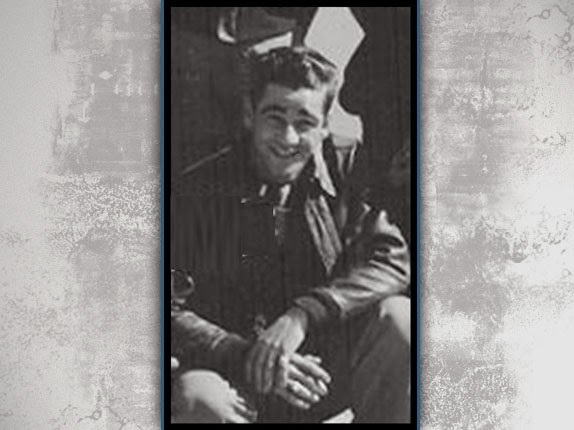
Just One Look...The Story of 2nd Lt. Clair Truby


A photograph is what started it all. Licensed Battlefield Guide Ralph Siegel saw the smile of 2nd Lt. Clair Truby, co-pilot of a World War II bomber, and he was intrigued.

"Look at his face, the character...," Siegel explains. "He's straight out of 1940s America, complete with a Dick Tracy haircut."

A native of Jefferson County, Pennsylvania, Truby is one of 1,624 World War II vets buried in Soldiers' National Cemetery. Siegel had to know more about this charismatic airman who served in the Army Air Force's 833rd Bomb Squadron. 

He learned that Truby flew a B-24 Liberator, one of 18,000 that were mass-produced during World War II.

"Nothing near those numbers has ever been made in aviation history, not just military history, but the entire history of aviation," explains Siegel. While many airmen christened their planes with tough names, Truby's bore the unlikely name "Winnie the Pooh."

Truby, along with his co-pilot, Lt. William Moseley and eight crew members, were assigned to "Operation Transportation," which obliterated the French transportation system in 1944. Siegel learned that Truby and his crew were bombing train tables on June 8, 1944 and flying at such a low level that the blasts from the bombs damaged their plane. Attempting an emergency landing in England, the entire crew of 10 was killed.

It's the first of dozens of heartbreaking stories that Siegel has researched over the past five years. A Licensed Battlefield Guide for 10 years, Siegel credits two other guides, Roy Frampton and Richard Hohmann, with sharing their knowlege of World War II soldiers buried in Gettysburg. Siegel now leads specialized tours through the cemetery, entirely focused on the stories of World War II veterans, Army airmen like Truby, or those who died at Pearl Harbor and D-Day.

He has even developed a tour that takes attendees through the entire chronological history of World War II, based upon the stories of soldiers united in rest at Gettysburg.

"There's more to America's military sacrifice than the Civil War," Siegel says. "The guts of these young men [in World War II]...what astounds me is not so much that they get into these planes the first time, but that they get into them a second and third time...it's unimaginable.

"Because of this central place, because of this cemetery, because of Abraham Lincoln, their sacrifice deepens the [American] story."

Visit Ralph Siegel's website for more information. Siegel's World War II-themed cemetery tours are typically offered to the public every June on the anniversary of D-Day and September during World War II Weekend. A resident of Mercerville, New Jersey, Siegel regularly travels to Gettysburg to lead Licensed Battlefield Guided tours. Contact the LBG desk at the Gettysburg National Military Park Museum and Visitor Center at 877-874-2478.

—Written by Karen Hendricks


Parking Updates for Gettysburg Dedication Day Event


Gettysburg National Military Park is temporarily closing certain roads in order to facilitate the parking and shuttle transportation system for the ceremony marking the 150th Anniversary of President Abraham Lincoln's Gettysburg Address on November 19 at the Soldiers' National Cemetery.

Beginning at 6 a.m. the following roads will close: Taneytown Road from the access road to the Museum and Visitor Center north to the intersection with Steinwehr Avenue, and all of Sedgwick, United States, Hancock, Pleasonton and Hunt Avenues. The park expects to reopen the roads at approximately 2 p.m.

The Dedication Day ceremony begins at 10 a.m. and will last approximately 90 minutes. The event is free; no ticket will be required to enter. Gettysburg National Military Park, the Gettysburg Foundation, the Lincoln Fellowship of Pennsylvania and Gettysburg College sponsor the annual ceremony. 

PARKING: Free parking is provided at the Gettysburg National Military Park Museum and Visitor Center, 1195 Baltimore Pike and numerous satellite parking areas with free shuttles. When the Museum and Visitor Center lots are full, vehicles will be directed to the Outlet Shoppes at Gettysburg, 1863 Gettysburg Village Dr., and then to other lots as needed. Temporary signs will be in place to direct cars to the overflow lots as needed. 

ACCESSIBILITY: A limited number of handicapped parking spaces will be available in the National Cemetery North parking lot. After parking or riding the shuttle, people with mobility impairments should use the cemetery entrance on Taneytown Road.  

SHUTTLE/TRANSPORTATION: The York Adams Transportation Authority will provide free shuttle buses from satellite parking areas beginning at 6 a.m. and running until 8:30 p.m.

CHARTER BUS PARKING AND DROP-OFF: Charter buses and motor coaches must drop off and park along Hancock Avenue via United States Avenue.

For more information, please visit Gettysburg National Military Park's website or call 717-334-1124.